May's Book Club is coming up!
Here's the info:
When: May 15th
Where: Rooster and Moon (10th and Bannock)
When: 6:30-6:45
Theme: Graphic Novels
I know it's finals week, but, hey guys, it's GRAPHIC NOVELS! They are the bee's knees!
Here are a few great ones to glance at if you aren't sure which to choose...
1. Watchman
2. Sandman
3. Jimmy Corrigan: the Smartest Kid on Earth
4. Maus
5. The Adventure of Tintin: The Black Island
6. The Miracle Man: The Golden Age
7. Ghost World
8. The Dark Knight Returns
9. American Born Chinese
10. Ghost World
Here are just a few, but these are great books to know if you are planing on teaching in schools with ESL learners.
Hope to see you all next week!!!
Oh, and if we have as many people as last time (which was awesome) I will split the group into 2 so everyone has time to discuss.
Thanks everyone!
http://www.goodreads.com/book/photo/13409101-teller
Monday, May 6, 2013

Monday, April 22, 2013
Non-Fiction Meeting Notes
Attendees
Jamie Rogers
James Crussell: 1st timer, read No Way Down
Hap Reir: 1st timer, read Chuck Klosterman IV
Brianne Barber: read A Walk in the Woods
Alex: read How They Croaked (middle school) and Never Fall Down(high school)
Emma Rapp: read Coming Back Strong by Drew Brees
Jeramy Hauck: Pursuit of Happiness and Columbine
Grace Williams: 1st timer, read "The Latino Reformation"
Bree Zwarts: read The Socio-Path Next Door
Tarayn Svalberg: read Diary of Anne Frank: the Graphic Novel and 3 Cups of Tea
Brad Oliva: A Long Way Gone
A Long Way Gone
Brad: Point of view from Ishmael born in Seirra Leon, 12 years old
gets picked up by a rebel army, clearly written, very enjoyable, 7th grade readers, especially boys and reluctant readers
Very personal novel because of the descriptions of the things he sees, ect.
Eventually leads him to New York and he attends college in America
Good example of memoir writing
Emma: Would you do a history lesson?
Brad: Yes, you could draw a map of his travels (And there is African history info in the back of the book.)
James: It's important that students see another country's genocide story.
Alex: How do you deal with violence?
Brad: The students he observed watched Hotel Rwanda before reading the novel. They had to get a permission slip.
3 Cups of Tea
Tarayn: A story about a man Greg Morrison who is stranded after rock climbing in the Middle East, he is rescued and vows to build schools for women
good for girls and boys, high school level, is available to teach in schools, visuals that will help alternative learners, it would be great with modern articles, helps promotes knowledge of the Middle East (other than the stereotypes)
Called 3 cups of tea, one to offer friendship, the other to say they respect you, and the last to say you are part of their family.
-Greg can be unreliable at times, according to the writer of the novel.
Alex: Is there a lawsuit on that novel?
Tarayn: The writer does talk about the writer being unreliable, could be said because of that.
Emma: You could teach a lesson on a reliable or unreliable narrator with the novel...
Anne Frank: A Graphic Novel:
Tarayn: The graphic novel gives a better perspective. You can teach middle school or high school.
Grace: The GN goes into more detail with the event of the holocaust.
Bree: There is a story of her parents too and some real life pictures in the back.
Tarayn: The pictures have the ability to hit home more.
Grace: Offering the choice between the actual diary and the GN gives students a better idea of Anne Frank's story.
The Socio-Path Next Door
Bree Zwarts: The first page says 1 and 25 Americans have no feeling and no notion of consequence. Beginning can be dry, the first senario is about a guy who is a bachelor and who forgets to feed his dog and misses a meeting to make sure it lives.
Is it conscience? Or is it to keep of appearances?
Reads like a narrative, students really had a lot to say and connected with it. boys and girls like it.
Jamie: Students would be very intrigued by it.
James: Could students relate?
Bree: Yes, we probably all know someone who can fit with the author's description.
Happ: And, like you said, they are really good at fitting in.
Grace: Would you teach it?
Bree: Yes, I would give it as a choice. If I was given the option, I would definitely teach it. Kids wouldn't realize they were teaching non-fiction.
Brad: What about concerned parents?
Bree: It's not for kids to start saying "You're a socio-path or you are," more to give reference to it.
Tarayn: My teacher dealt with this by giving a permission slip for parents to sign for students to access her classroom library.
Happ: Could you break it into pieces and teach certain parts?
Bree: Yeah, you could teach the first part on "what a sociopath is" or a certain character.
"The Mystery of Animal Grief," a Time article by Jeffrey Cluber
Grace: goes through the story of how animals grieve and the animal mindset. There are similar feelings to humans.
Alex: What is the reading level?
Grace: It should be accessible, juniors and seniors can read. You would have to fit it in with a unit.
Jamie: What unit?
Emma: Animal Farm
Happ: A Call of the Wild
Bri: It could be with a lesson on how to write a research article.
Happ: Or even how to read a research article. Have students pick out where the data is, ect.
Pursuit of Happiness
Jeramy: There is a movie based on a book, very different from the movie. The first half of the book is written on the main character's childhood and sets up for the movie. It is an enjoyable book, the next step after reading a novel like A Boy Called It.
It can be a lesson on how to strive and succeed, great life lesson. There are insights into items in the movie, such as the bathroom scene. Would help you to make a connection with your students, especially in a certain demographics where you have students that have faced struggle. Could really be taught in class.
Emma: What grade level?
Jeramy: It does deal with the Civil Rights movement and has some graphic nature and language. Could maybe teach it in 8th grade, but might recommend holding it off until the high school level. Would be a good book to recommend for non-fiction readers.
"The most dangerous place in the world is a public library."
Columbine by David Cullen
Jeramy: Cullen went through 5,000-6,000 pages that was collected on the actual case. The book was called into question on how authentic it is. Things I liked: there were a lot of myths around the 2 boys, such as Eric Harris was very popular at school. A quick page turner because there are facts from the evidence he found that help move the book along. Dillon, the second boy, was "the puppet that Eric played with."
Draw Back: given the age of the students now, the connection might not be as strong to want to read this book, but it would be a great story for students to read.
Happ: With that, it's good because the media can create this narrative that these kids were shy, bullied and that can make you more isolated if you are shy and bullied.
Jeramy: It might help to identify what the Columbine "thing" is.
Tarayn: Anytime something happens they always go back to Columbine and the story there.
Coming Back Stronger
Emma: This is a story about Drew Brees, he starts out with his childhood (slightly inflated). However, very motivating. It is all about resilience and how he came back after a couple of injuries and how a lot of people didn't think he would make it. Leaves to New Orleans right after Hurricane Katrina and weaves his story in with that occurance. It would be great to recommend to boys and, especially, Christian students. The story is very religious. Could teach at a 6th grade level or at any age. The only draw back to recommending it is if the student is not religious.
James: Does it talk about Canadian football.
Happ: No, that's Kurt Warner, but he's good too.
Jeramy: How do approach recommending this book because of the religious aspect?
Emma: You could do a book talk on it and ask the student how they feel about Christianity and if they are okay with reading a novel that talk about it.
Emma: The teacher I am with this semester gives students a much larger freedom to choice their own novel, helps with reading for fun.
Grace: Are they reading their books outside of class?
Emma: They do have a lot of time to read in class and we go around and conference. We give task and objectives during conference. If students are reading the same novel, we can group them and give a mini-lesson on their book.
How They Croaked
Alex: It is on how famous people died. It is a great novel that is very interesting. The descriptions are graphic (example Henry VIII's body exploded in coffin because of obesity). I found myself wanting to know more about their lives after reading about their deaths. Low reading level, definitely middle school. It's individual stories so you don't need to read the whole thing. It's not a graphic novel, but it does have a lot of pictures. Would be good for ESL's because it isn't intimidating. Very different, couldn't go too deep. Great for recommending.
Jeramy: Independent reading?
Alex: Yes, it would never fail to interest a reader.
Jeramy: Could you use them as investigative reports?
Alex: It could totally be your start and then, now write a report on a persons life.
Happ: A lot of the deaths were descriptive, could it be a model text as descriptive language?
Alex: Absolutely, what makes this book appealing is this funny, dark story.
A Walk In the Woods
Bri:
Chuck Klosterman: writes for Spin Magazine and Grant Land, sort of dorky guy, there are a bunch a little essays. Don't have to recommend the whole novel for reluctant readers. This book is about real life situations, such as video games, KISS, and he is good about building an argument. It may be ridiculous in the novel, but he argues and explains it well. Very accessible pros that would be good to teach.
Jeramy: How long are his essays?
Happ: 2 or 3 pages
Jeramy: Could you use these as a hook?
Happ: Oh, definitely.
Jeramy: Is there offensive language that we will have to worry about?
Happ: Nothing compared to Catcher in the Rye, nothing too offensive. You could easily find one that doesn't curse and not worry about getting letters from parents.
Bri: So, recommend the whole book and teach pieces for argument purposes.
Happ: I was reading Lone Ranger and Tonto Fist Fight in Heaven and there is more offensive details in there than in this novel.
End Note
Bree: Would you ever teach the Onion
Tarayn: Yes, for how to teach Satire.
or...credible sources.
Monday, April 15, 2013
To Non-Fiction and Beyond!
Hey!
Book Club Meeting this week!
When: Wednesday, April 17th
Time: Somewhere between 6:30-6:45
Where: Rooster and Moon, 10th and Bannock
Topic: Non-Fiction
Just to give everyone an understanding of what to expect, this is a meeting where we talk about what we have read in the context of teaching. This week I have chosen A Walk in the Woods. It's a story of a man who walks the Appalachian Trail (it's suppose to be quite humorous).
This topic was chosen because research has shown that our male students prefer non-fiction stories. It is our job as (future) teachers, to find novels that interest every student. I personally believe that non-fictions have a bad representation these days. Most of us think of a non-fiction novel as being something horribly depressing. However, that is certainly not the case. By educating ourselves in the popular non-fiction novels of the day, we can teach and/or recommend great novels that can interest all readers.
If you are struggling with choosing a novel for the meeting, go to the Good Reads site:
http://www.goodreads.com/shelf/show/nonfiction-short-stories
They have a huge selection of non-fiction stories to chose from.
Book Club Meeting this week!
When: Wednesday, April 17th
Time: Somewhere between 6:30-6:45
Where: Rooster and Moon, 10th and Bannock
Topic: Non-Fiction
Just to give everyone an understanding of what to expect, this is a meeting where we talk about what we have read in the context of teaching. This week I have chosen A Walk in the Woods. It's a story of a man who walks the Appalachian Trail (it's suppose to be quite humorous).
This topic was chosen because research has shown that our male students prefer non-fiction stories. It is our job as (future) teachers, to find novels that interest every student. I personally believe that non-fictions have a bad representation these days. Most of us think of a non-fiction novel as being something horribly depressing. However, that is certainly not the case. By educating ourselves in the popular non-fiction novels of the day, we can teach and/or recommend great novels that can interest all readers.
If you are struggling with choosing a novel for the meeting, go to the Good Reads site:
http://www.goodreads.com/shelf/show/nonfiction-short-stories
They have a huge selection of non-fiction stories to chose from.
Monday, April 1, 2013
Fantasy Novels: Witches, Werewolves, and Zombies (oh, my!)
Fantasy Novels
3-20-13
Hello Again,
This meeting we had a really fun topic. Or, at least I thought so. :) It was on the world of fantasy. The theme tried to stay away from the, ever so popular, vampire world in order to direct us towards other fantastical elements. Of course, we brought in the traditional stories of Tolkien and Rowling, but we also found some great new novels. Some we even talked on teaching. I hope you enjoy the notes and thanks again to everyone who participated. Our book club continues to grow and I am very thankful for our supporters!
Members and their novels:
Jeramy
World War Z:
Has a lot of history incorporated into the novel. Would be good for teaching because you could tie into American history. A well written novel, not too graphic. More of a high school novel because of the language.
-He could see a lot of lessons in the novel.
-Author has a unique style.
Gwen
The Lord of the Rings:
Personification in Lord of the Rings: Ask the question, what is it like to be human?
Fantasy world includes original participation of nature and how it makes us human.
Fantasy vs. Sci-Fi. is similar to past vs. future.
Emma:
The Plague of the Dead: Middle school novel. Talks about the "Morning Star Virus" (Residence Evil). Zombies are taking over and it's viewed through an internet chat base. Small section novel, could model journal entries.
Taryn:
Harry Potter: Has all of the elements of the theme. Assign it in middle school. If you are teaching it has to be fostered appropriately. Does use older elements of werewolves, and the fantasy world. Does change the concept of witches and wizards because they are seen as "good" figures. There is the coming of age element and the hero's journey. The writing is really well thought out and mapped out. It is a really well read and criticized novel, very significant novel that influenced the entertainment culture.
Inspiring Thought: "If you don't challenge yourself as a reader, you don't challenge yourself as a writer." -Jen.
Jamie:
Frankenstein: Just got done teaching the novel. What stuck the most is that gothic literature is more about the suspense and the intrigue, not the horror or the terror. It creeps up on you. :) After the students understood what "gothic writing" was they were able to compare it to other writings and come up with their own questions.
Had students write what they would give to Frankenstein to read. Was able to teach Paradise Lost because Frankenstein read that in the novel. Had students think more in depth on what they've read and even research what they would read.
Insightful Thought by a Student: "A dream is like a light at the end of a tunnel and if you don't reach for it, it dims." -Emma's student.
Brad:
War World Zombie: You could teach the novel through dialect or dialogue. It's a lose format, so you could teach sections.
Social aspect: half of the people in the novel wanted to riot, half the people wanted to help. There could be a book talk or a discussion on what you want to do.
Style perspective: the interviews are all different and therefore different style so of writing and interviews.
Jen:
Professional Development Novels: Jeff Anderson-Ten Things Ever Writer Need to Know,
***Got Jen her job essentially: Peter Johnson-Choice Words (how to talk to students so they will be engaged)
Peter Johnson-Opening Minds (trick students into learning and thinking deeper)
Jim Burke: Teacher Companion
P.S. He signed Jen's book at the airport in Vegas.
Next Week: Nonfiction: April 17th
3-20-13
Hello Again,
This meeting we had a really fun topic. Or, at least I thought so. :) It was on the world of fantasy. The theme tried to stay away from the, ever so popular, vampire world in order to direct us towards other fantastical elements. Of course, we brought in the traditional stories of Tolkien and Rowling, but we also found some great new novels. Some we even talked on teaching. I hope you enjoy the notes and thanks again to everyone who participated. Our book club continues to grow and I am very thankful for our supporters!
Members and their novels:
Jeramy
World War Z:
Has a lot of history incorporated into the novel. Would be good for teaching because you could tie into American history. A well written novel, not too graphic. More of a high school novel because of the language.
-He could see a lot of lessons in the novel.
-Author has a unique style.
Gwen
The Lord of the Rings:
Personification in Lord of the Rings: Ask the question, what is it like to be human?
Fantasy world includes original participation of nature and how it makes us human.
Fantasy vs. Sci-Fi. is similar to past vs. future.
Emma:
The Plague of the Dead: Middle school novel. Talks about the "Morning Star Virus" (Residence Evil). Zombies are taking over and it's viewed through an internet chat base. Small section novel, could model journal entries.
Taryn:
Harry Potter: Has all of the elements of the theme. Assign it in middle school. If you are teaching it has to be fostered appropriately. Does use older elements of werewolves, and the fantasy world. Does change the concept of witches and wizards because they are seen as "good" figures. There is the coming of age element and the hero's journey. The writing is really well thought out and mapped out. It is a really well read and criticized novel, very significant novel that influenced the entertainment culture.
Inspiring Thought: "If you don't challenge yourself as a reader, you don't challenge yourself as a writer." -Jen.
Jamie:
Frankenstein: Just got done teaching the novel. What stuck the most is that gothic literature is more about the suspense and the intrigue, not the horror or the terror. It creeps up on you. :) After the students understood what "gothic writing" was they were able to compare it to other writings and come up with their own questions.
Had students write what they would give to Frankenstein to read. Was able to teach Paradise Lost because Frankenstein read that in the novel. Had students think more in depth on what they've read and even research what they would read.
Insightful Thought by a Student: "A dream is like a light at the end of a tunnel and if you don't reach for it, it dims." -Emma's student.
Brad:
War World Zombie: You could teach the novel through dialect or dialogue. It's a lose format, so you could teach sections.
Social aspect: half of the people in the novel wanted to riot, half the people wanted to help. There could be a book talk or a discussion on what you want to do.
Style perspective: the interviews are all different and therefore different style so of writing and interviews.
Jen:
Professional Development Novels: Jeff Anderson-Ten Things Ever Writer Need to Know,
***Got Jen her job essentially: Peter Johnson-Choice Words (how to talk to students so they will be engaged)
Peter Johnson-Opening Minds (trick students into learning and thinking deeper)
Jim Burke: Teacher Companion
P.S. He signed Jen's book at the airport in Vegas.
Next Week: Nonfiction: April 17th
New YA Novels: Book Club Notes
New YA Novels
2-20-13
Hey Everyone,
This was a meeting where everyone read a novel that had been written in the last year or so. It was meant to give us am idea of what's being written now, rather than continuing to focus on what was written 50+ years ago. Overall I think the meeting was very enlightening. By continuing to follow contemporary YA lit., we will grow in our knowledge of students and their interest. Thanks to everyone who participated!
Discussion Questions:
1. What themes are present?
a. Where there any new ides with these new novels or did you see them as telling an "age old story."
Legend: Romance, but female character in control.
Fault in Our Stars: Romance as driving force, the persistent guy.
Mocking Jay: Trilogy has romance, but truly questionable.
Tiger Lily: first love romance, post-colonialism.
2. What are the similarities between classic and newer YA stories?
Themes are similar. Have young protagonist. Happy endings
3. How was your novel written for a YA audience (young main character, easy to read, high school romance, coming of age story)?
4. As a critique did you find your novel well written?
a. Did it have good diction, grammatically correct, proper sentence structure, good character introduction?
Tiger Lily: well written, but faulty narrator
Fault in Our Stars: predictable in some instances (for adults), by not poorly written.
Inside and Out: poetry was lacking in poetic conventions (probably intentional because narrator is 9 years old)
5. As a book enthusiast, did you enjoy yourself?
One and Only Ivan: loved that it was based on true story, but slightly uninteresting
6. Would you recommend this novel or have it in your classroom?
7. Would you teach this novel as a whole or in sections?
a. If so, how?
8. Compare and contrast classic YA (Wind in the Willows, Huck Finn, To Kill a Mockingbird) with contemporary YA.
a. Where's the direction going? Feminism, Multiculturalism, Youth-centered, empowerment of youth, unrealistic settings, Fantasy novels
b. Do you see a problem with contemporary authors? No, by putting yourself in another's mind or place, you broaden your mind.
c. Do you see a resistance in the school system and what are your feelings?
Believe that there should be a mixture of both.
Very situational, "how old is the librarian?" Librarian that is older will usually recommend older novels they also decide what is stocked.
Summary of Meeting
Books Read:
Mocking Jay, Tiger Lily, Fault in Our Stars, One and Only Ivan, Legend, Inside Out and Back Again
Main Points/Thoughts by readers:
Mocking Jay: teachable, political intrigue, despotic regime, cautionary tale, gender discussion, great gate-way book.
Tiger Lily: easy read (middle school), love story, post colonial ideals
Fault in Our Stars: tear jerker, typical John Green book, has already recommended the book twice to high schools (one read it in 2 days), language is accessible, easy for teenagers to get excited about.
One and Only Ivan: won Newberry, middle school level, good for struggling readers, verse novel, from animal's perspective, good for teaching a hero's journey, 6.8 out of 10 (moved sort of slowly).
Legend: Asian main character, good for diverse readers, 2 different perspectives (boy and girl), can be compared to Hunger Games, very enjoyable, middle school level-pre Hunger Games level, can teach different perspectives with this novel.
Inside Out and Back Again: Read it in one night, very engaging, poetry novel, Vietnamese main character, accessible, great for teaching American history/culture,
Thought Provoking Statements:
YA Novels need to have hope.
Teaching ideas and/or strategies:
Scaffold your novels. Use Hunger Games for 1984. Use Tiger Lily for describing a higher post-colonial novel.
Find the strength in quotes. Have a board where students write their favorite quote. It invokes reading and has students take pride in the quote they choose.
Wednesday, January 16, 2013
Book Club Meeting Notes 1/16/2012
First off, congratulations to Jen for her job at Aurora Central High School! Woo!
The Hero's Journey
Joseph Campbell coined the term. Joseph helped to number the steps and provide summaries of each category -- the hero's journey is cyclical and may not always follow the steps
Emma read The Odyssey.
The hero's journey should be clarified by visuals. Students can make their own hero's journey (visually) and describe how the characters and plot fit each step. Students can make their own representation of the hero's journey about their favorite artist, musicians, parents, friends, family...e.c.t...
Some steps in The Odyssey are missing; another text can be used to fill in the "gaps".
But what about modern texts? How do they fit the hero's journey?
A lot of times kids do not know what they're looking for; for this reason it is important to focus on specific things like steps of the Hero's journey.
Alex read The Hobbit J.R. Tolkien and The Absolutely True Diary of a Part Time Indian by Sherman Alexie
Interestingly, The Hobbit literally fits many steps of the hero's journey.
Sometimes it may seem difficult finding the hero's journey in books that are not obviously about a "hero" -- however, in The Absolutely True Diary of a Part Time Indian Junior leaves the mundane word, enters a new world, meets new challenges and difficulties, and not only survives but gains new understanding by the end.
Gwen read Haroun and the Sea of Stories by Salman Rushdie. This book would be easily adaptable for middle schoolers and ninth graders. It is an exemplar of the hero's journey -- it has mystical creatures, archetypes of allies and villains (the names of characters match their personalities and traits). It is a quick read.
Brianne read Beowulf and admits that it may not be fit for high school students but could definitely be adapted for advanced students. Beowulf is similar to The Odyssey as far as matching the cycle of the hero's journey.
Tarayn read the last Hush Hush book called Finale (the 4th book of the series). Tarayn read it along with some of her previous students. It is a modern hero's journey, with a female perspective. It becomes a little "mushy" and the main character is male-dependent -- however many of the steps are followed.
With the modern hero's journey is another step standing up to society?
It is important to figure which books will attract which students -- some books will attract both genders but teachers must recognize the impact of choice books on students and how different genders will be attracted to different qualities in a book.
Thank you to everyone for coming!
First off, congratulations to Jen for her job at Aurora Central High School! Woo!
The Hero's Journey
Joseph Campbell coined the term. Joseph helped to number the steps and provide summaries of each category -- the hero's journey is cyclical and may not always follow the steps
Emma read The Odyssey.
The hero's journey should be clarified by visuals. Students can make their own hero's journey (visually) and describe how the characters and plot fit each step. Students can make their own representation of the hero's journey about their favorite artist, musicians, parents, friends, family...e.c.t...
Some steps in The Odyssey are missing; another text can be used to fill in the "gaps".
But what about modern texts? How do they fit the hero's journey?
A lot of times kids do not know what they're looking for; for this reason it is important to focus on specific things like steps of the Hero's journey.
Alex read The Hobbit J.R. Tolkien and The Absolutely True Diary of a Part Time Indian by Sherman Alexie
Interestingly, The Hobbit literally fits many steps of the hero's journey.
Sometimes it may seem difficult finding the hero's journey in books that are not obviously about a "hero" -- however, in The Absolutely True Diary of a Part Time Indian Junior leaves the mundane word, enters a new world, meets new challenges and difficulties, and not only survives but gains new understanding by the end.
Gwen read Haroun and the Sea of Stories by Salman Rushdie. This book would be easily adaptable for middle schoolers and ninth graders. It is an exemplar of the hero's journey -- it has mystical creatures, archetypes of allies and villains (the names of characters match their personalities and traits). It is a quick read.
Brianne read Beowulf and admits that it may not be fit for high school students but could definitely be adapted for advanced students. Beowulf is similar to The Odyssey as far as matching the cycle of the hero's journey.
Tarayn read the last Hush Hush book called Finale (the 4th book of the series). Tarayn read it along with some of her previous students. It is a modern hero's journey, with a female perspective. It becomes a little "mushy" and the main character is male-dependent -- however many of the steps are followed.
With the modern hero's journey is another step standing up to society?
It is important to figure which books will attract which students -- some books will attract both genders but teachers must recognize the impact of choice books on students and how different genders will be attracted to different qualities in a book.
Thank you to everyone for coming!
Posted by Jamie Rogers
Thursday, January 10, 2013
Hey Everyone,
Our next book club meeting is January 16th and I wanted to get a few ideas out there for discussion. The theme this month is "A Hero's Journey," and I felt I should clarify what that may mean. This idea has been around, well, forever. The ultimate tale is that of Beowulf, where, you have a main character that goes through certain hardships in life in order to acheive a fantastic goal.
Even though the storyline of the hero's journey dates back to some of the first novels, the first person to recognized the journey as a story pattern was Joseph Campbell in the 1940's. He wrote a novel called, The Hero with a Thousand Faces and called the actual journey a "Monomyth."
The term "monomyth" actual came from James Joyce in his novel, Finnegans Wake:
And then and too the trivials! And their bivouac!
And his monomyth! Ah ho! Say no more about it! I’m sorry!
I saw. I’m sorry! I’m sorry to say I saw! (Joyce 575)
Now, from this passage you may wonder why Campbell chose the word monomyth at all? Finnegans Wake is, of course, a novel that some say is impossible to understand. However, if I were to guess, I would say that Campbell himself was sorry that he recongnized this storyline repitition. Because, once you understand the journey of the hero, you will realize that most classic and contemporary novels encompass this story line.
To better break down a hero's journey, there are diagrams that people have created. These diagrams work well in classrooms to give students a visual understand of the character's journey. .
This image can be found on www.thewritersjourney.com.
Our next book club meeting is January 16th and I wanted to get a few ideas out there for discussion. The theme this month is "A Hero's Journey," and I felt I should clarify what that may mean. This idea has been around, well, forever. The ultimate tale is that of Beowulf, where, you have a main character that goes through certain hardships in life in order to acheive a fantastic goal.
Even though the storyline of the hero's journey dates back to some of the first novels, the first person to recognized the journey as a story pattern was Joseph Campbell in the 1940's. He wrote a novel called, The Hero with a Thousand Faces and called the actual journey a "Monomyth."
The term "monomyth" actual came from James Joyce in his novel, Finnegans Wake:
And then and too the trivials! And their bivouac!
And his monomyth! Ah ho! Say no more about it! I’m sorry!
I saw. I’m sorry! I’m sorry to say I saw! (Joyce 575)
Now, from this passage you may wonder why Campbell chose the word monomyth at all? Finnegans Wake is, of course, a novel that some say is impossible to understand. However, if I were to guess, I would say that Campbell himself was sorry that he recongnized this storyline repitition. Because, once you understand the journey of the hero, you will realize that most classic and contemporary novels encompass this story line.
To better break down a hero's journey, there are diagrams that people have created. These diagrams work well in classrooms to give students a visual understand of the character's journey. .
This image can be found on www.thewritersjourney.com.
Wednesday, December 19, 2012
Discussion Questions for the Theme of Dystopian Novels
Here are a few questions I came up with. These could be used in class at the high school level. Most of them will need a brief background lecture before asking.
1. What makes a story a Dystopian tale?
-Describe the typical plot and story line.
2. How did these story lines start?
-Is there historical significance to the cause of these stories?
3. List some ways that people are controlled in these stories.
-Is one way better than the other?
4. Is there cause that you can think of to write a dystopian novel now? For example, any political happenings that could create such a society?
1. What makes a story a Dystopian tale?
-Describe the typical plot and story line.
2. How did these story lines start?
-Is there historical significance to the cause of these stories?
3. List some ways that people are controlled in these stories.
-Is one way better than the other?
4. Is there cause that you can think of to write a dystopian novel now? For example, any political happenings that could create such a society?
Wednesday, November 28, 2012
Book Club Meeting: November
Just a reminder, next book club meeting is:
Tomorrow, Thursday 29th
Backstage Coffee
6:00pm
We are reading:
The Scarlet Letter by Nathaniel Hawthorne
If you don't have time to read the entire novel, come and talk with us about a short story or other novel you have read by Nathaniel Hawthorne or just come and give us some different ideas on how to teach the novel and Hawthorne as an author.
Tomorrow, Thursday 29th
Backstage Coffee
6:00pm
We are reading:
The Scarlet Letter by Nathaniel Hawthorne
If you don't have time to read the entire novel, come and talk with us about a short story or other novel you have read by Nathaniel Hawthorne or just come and give us some different ideas on how to teach the novel and Hawthorne as an author.
Thursday, July 19, 2012
Links to Tarayn's Google Sites

~Tarayn
Young Adult Literature:
https://sites.google.com/a/mscd.edu/tms-young-adult-lit-project-2010/
Canon Literature:
https://sites.google.com/a/mscd.edu/canon-literature/home
Lesson Planning Ideas:
https://sites.google.com/a/mscd.edu/my-lesson-planning-ideas/
Shakespeare Works:
https://sites.google.com/a/mscd.edu/shakespeare-guide/
Tuesday, July 17, 2012
BNW: Discussion Questions
Hello Again,
I prepared a few discussion questions for Brave New World. I tried to find and create questions that were geared towards the classroom.
I prepared a few discussion questions for Brave New World. I tried to find and create questions that were geared towards the classroom.
Brave New World Questions
1.
What is the significance of the title? How does
Shakespeare hint at the novels intentions?
2.
What is the significance of the World State’s
motto, “community, identity, stability? Isn’t “identity” ironic?
3.
The controller uses subliminal messages to
create happy children. The messages are a way of getting rid of questioning.
How does our society use the same approach?
Advertising and Media. Slogans for
commercials.
4.
How real is the dystopian world that Huxley
creates? What similarities do you see in our everyday life?
Soma: Prescription drugs
Amenities: happiness
Lack of religion
5.
What is the significance of the lighthouse?
Lighthouses are used to symbolize
epiphanies and understanding of greater ideas.
6.
Why does John choose unhappiness and death over
a fantasy world?
Wednesday, July 11, 2012
Tonight is the night!
Finally guys and gals, the annual Metro State Book Club meeting is here. Don't fret my pet, what you are reading is not a mirage or a figment of your imagination. The book club is really meeting tonight, I promise.
Speaking of reality or lack there of, how real are the dystopian worlds that our novels present to us? Hmm...I'm not sure. I think I will ask my book club members this question, and many others, tonight at 5:30 at Rooster and Moon. If you not there then you must have a good excuse. Only a fool would miss this opportunity.
See you all tonight and make sure to bring those very expensive, educated, Metro State thinking caps. You will need them!
 5:30PM
Rooster and Moon (10th and Bannock)
Speaking of reality or lack there of, how real are the dystopian worlds that our novels present to us? Hmm...I'm not sure. I think I will ask my book club members this question, and many others, tonight at 5:30 at Rooster and Moon. If you not there then you must have a good excuse. Only a fool would miss this opportunity.
See you all tonight and make sure to bring those very expensive, educated, Metro State thinking caps. You will need them!
Rooster and Moon (10th and Bannock)
Thursday, June 14, 2012
A Dystopian's Paradise
The YA world has a new love, and that love is a dystopia...novel, that is. Our teenage readers seemed to be absorbed in many recently released dystopian novels. There is the ever popular (and awesome) Hunger Games series, Above by Leah Bobet, Ashes Ashes by Jo Treggiari, Empty by Suzanne Weyn, and the Uglies series. These are just a handful of what is on the market. Although, most of the novels will never be taught in a classroom, it is important that we understand how to properly teach a dystopian novel, while still keeping the student's interested.
The main dystopian novels that are being taught in the classroom are Brave New World, 1984, and Hunger Games. Our next book club meeting is dedicated to revisiting these influential post-modern predictions. We've split the group up so that some of us will be reading Brave New World and some will be reading 1984. We've all read Hunger Games so we will take turns talking about the novel.
If you would like to attend and haven't been to a meeting yet, please feel free to read any of the listed novels. I, personally, am very excited to revisit Brave New World. I read the novel as a senior in high school and it will be interesting to see it from a (slightly) more mature perspective. :)
Monday, June 11, 2012
Further Information
If you are interested in further recommending or teaching either of the novels I read, here is some additional thoughts and information.
Oh, by the way, did I mention it's also a movie? This could potentially help visual learners if you wanted to incorporate a few scenes from the film.
However, there is a good reason to know about this series. For one, it is very popular and two, it is going to be the next YA movie. The City of Bones movie will come out in 2013 and is sure to be the "next big thing" in the teenage world. As a teacher, it's good to be on the up and up.
Wednesday, June 6, 2012
Book Talks!
We met on June 6th and shared our book-talks with one another. Each member shared a minimum of two books and here is a brief overview (read: sloppily typed word document) of our discussion. Soon each book will have a more in-depth entry :)
Between Shades of Gray
By Ruta Sepetys

o
Author did a good deal of research!
o
Fifteen year old Alena just got into art school;
o
Stalin’s Police knock on her door
o
Her and her brother and mother are taken away
and put into cable cars and ride for six weeks.
o
She sends messages to her father by drawing
pictures instead of writing for fear of being found out; she finds people who
are trustworthy and passes the pictures along
o Themes of heartbreak, death, and massacre.
o Character and plot development needed – too many questions left unanswered: did her father ever receive the letters or pictures?
o Beautiful language
Why We Broke Up
By
Daniel Handler
 o “Word
Vomit”; stream of consciousness type of writing
o “Word
Vomit”; stream of consciousness type of writing
o Min
= narrator
o Letter
to Ed; her ex-boyfriend
o Each
item is the reason they should have broken up earlier
o Novel
wraps up; conclusion includes hints from earlier in the text
o Kind
of book that will “bring you back” to high school days
o Female related
o Elements of visual literacy (pictures)
o Prince Honor Book
o 3-4 Stars on Goodreads
Exit Here
By Jason Myers

o
Male protagonist
o Bitter;
similar to Holden Caufield
o Rich
kid complex
o Social
dynamics
o
Drug Use
o
Cussing
o
Recommended for older teens
o
Shows the consequences of drug use
If I Stay
By Gayle
Forman

o
Story of a young female narrator who is in a
coma
o
Struggles with whether or not to stay alive or
let herself die
o
Metaphysical relationship between the narrator
and the world
o
Process of death
o
Quick read
o
Middle and High School
o Struggles with the choices she has made
o College, having sex, e.c.t….
o Discussion questions at the end of the book
City of Bones
By Cassandra Clare

o
Becoming a movie
o
“Addicting”
o
Prequel is Clockwork
Angel
o
Recommend the prequel first
o
Better feminine character – “not a [typical]
female idiot”
o
Not very appropriate for younger teens;
o Not well written; recommend for a summer-reading book
o Not something that Bri would “ever ever” teach J
o 3 perspectives
o “Shadow Hunters” – Keep the underworld protected
o Better than Twilight not as good as Hunger Games
The Golden Compass
By Phillip Pullman

o Middle
School-ers
o Fun
read for pre-teens
o
Difficult enough to challenge students
o Literary;
“beautifully written”
o Teachable
o
Teachers can choose which topics to teach and
which ones not to
o Parallels to Narnia Series
o Fantastical but deep [demon as sub-concious]
o Religious and political side if you choose to look at it that way
Love
and Obstacles
By Alexander
Hemon
 o Bo"th
feet in one overlapping world"
o Bo"th
feet in one overlapping world"
o Collection
of fictional stories about day-to-day life
o No
plot; “this is how it is” type of stories
o Does
not deal with the more interesting sides of war
o Teach
it to twelfth graders; for more mature audiences
o
Teach excerpts
o Each
story jumps into the setting
o “Beautiful
Prose”
VietnaAmerica
By GBTran
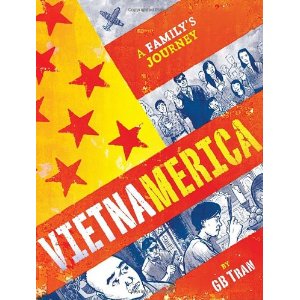
o Graphic
Novel
o Written
and illustrated by
o Puzzle
pieces represent what makes up his life
o Illustrations
are “amazing”
o True
story based on Tran’s life
o First
generation Vietnamese born in America;
parents escaped before the fall of Saigon
parents escaped before the fall of Saigon
o Parents left half of their family back in Vietnam because they didn’t make it out
o The whole book is about his family telling him to go back to Vietnam
o When he gets there he finds out that he is the same age as his father was when he left Vietnam
o (parallel between his lfie and his father’s life)
o Book parallels narrator’s journey to Vietnam and his parents escape
o Difficult to keep up with
o Recommend for Juniors and Seniors
o Identity issues
o Discussion on traditions; how traditions are lost
o Book about finding history and finding his roots
Outline of PowerPoint for Thirteen Reasons Why
13 Reasons Why
Book Talk
If someone told you that you were one of the reasons that
they committed suicide – would you want to find out why?
In this novel the narrator, 16 year-old Clay Jensen, is
given that opportunity two weeks after Hannah Baker kills herself.
"Clay Jensen returns home from school to find a mysterious
box with his name on it lying on his porch. Inside he discovers several cassette
tapes recorded by Hannah Baker--his classmate and crush--who committed
suicide two weeks earlier. On tape, Hannah explains that there are thirteen
reasons why she decided to end her life. Clay is one of them. If he listens,
he'll find out how he made the list"


What
Makes This Book Different?
What Attracts Teens?- Dual
perspectives
- Both
male & female
- Reflects
reality
- Real
High School situations
- Friendships
- Romance
- Teachers/School
- Incorporates
language that teenagers use and are accustomed to
- Provides
a hopeful conclusion
- Quick but insightful read; teenagers can open this book and not be discouraged by longevity or difficult language
Excerpt
from Text
“How many times did I stand right here, thinking I would
never have a chance with Hannah Baker? I had no idea how she felt about me. No
idea who she really was. Instead, I believed what other people said about her.
And I was afraid what they might say about me if they knew I liked her…And
then, when she died, the chances disappeared forever”.
=Regret, shame, and guilt.
But a lesson learned.
What are Teens Saying About this Book? What are Other Authors Saying?
What are Teens Saying About this Book? What are Other Authors Saying?
- Both
Sherman Alexie and Ellen Hopkins have called this book one that they
“could not put down”; a story that became both haunting and inspiring
- Teens
are consistently proclaiming, on the internet through blogs and the book’s
website, that this book has made them want to help people and “think about
what [they] say”
- This
book has won over sixteen awards including “Best Book for Young Adults”
given by the American Library Association and “Best of the Best books”
from the Chicago Public Library
- Thank You!
So, Who is the Author? Why did Jay Asher Write This?
- His niece attempted suicide when she was the same age as Hannah
- He used cassette tapes to intentionally date his work that way it would appear retro
- He knew he wanted to use dual perspectives but did not know how to incorporate Clay; he did not choose Clay until almost halfway through the novel. He wanted a more innocent character to be the trusted narrator
- He chose Hanna’s thirteen reasons based on his own experiences and those lived vicariously through others
- 13 Reasons Why was his first book
Email Jamie if you have any questions/want the PPT! Jroger68@mscd.edu
Tuesday, May 15, 2012

Monday, May 14, 2012
Book Club Meeting
We've officially sent the invite out for our next book club meeting. We are each reading 2 different YA books and giving a book talk. I decided to choose something I could teach, Golden Compass and something I could recommend, City of Bones. I know that Jennifer chose Why We Broke Up and Between Shades of Gray, which she wants to make known, is NOT the married lady porn book. I've heard that Jaime is reading The Maze Runner, but so far I don't know the second book she chose. I suppose her second book and Tarayn's choices will be a surprise! Sounds like fun. Anyways, here are the details:
June 6th
5:30 pm
Rooster and Moon (10th and Bannock)
Hope I see some new book lovers there!
June 6th
5:30 pm
Rooster and Moon (10th and Bannock)
Hope I see some new book lovers there!
Wednesday, May 9, 2012
Discussion Questions: The Catcher in the Rye

Discussion Questions
How does Salinder tend to end chapters? What do
they have in common? How do they set the tone of the novel?
There are definite cliffhangers and
foreshadowing moments. The way that the chapters end, make you want to read the
next chapter. Even if the book is not the most exciting, stylistically the
novel keeps an enticing flow.
2.
Is Holden the “phony” character in the book?
Yes and no, Holden seems to be a modern day
“hipster.” He tries so hard to not be a phony that he over exaggerates everyone
else’s motives. Holden’s age makes it
difficult for the reader to sympathize with his idea of a phony. Being an adult
reader we can see the contradiction and the nativity that Holden has. However, as a younger reader, you might be
able to apprehend Holden’s point of view. It’s common for teens to rebel and
reject the older generation. Holden is, in a sense, acting his age. Holden may
be projecting his views of himself onto other people.
3.
Catcher in the Rye centers around a young man;
can young women relate to this too? What about Holden is gender specific and
which qualities do both sexes share?
There are concepts in the book that are
asexual. The concept of isolation, rejection, loneliness, and cynicism that are
universal to our emotions. Of course, he speaks through a male’s perspective so
there are some themes in the book that are harder to connect to as a
female. For example, in Perks of Being a Wallflower we have a
narrator that is a little more sensitive and speaks with a larger perspective
of the world. Holden, unlike the narrator in Perks is more narrow-minded and contradictory.
4.
Is the ending of Catcher optimistic, reflective, or gloomy?
This answer really depends on how you read
the book. You are presented with a carousel ride at the end of the novel. The
carousel can symbolize how you feel about the end of the book. It seems that he
becomes reflective when he looks at the carousel. You also have the weather
which alludes to the outcome of the book. Standing in the rain, Holden’s
childhood is being washed away. Looking at the carousel he is reminded that he
no longer belongs on a child’s ride. He has an epiphany that brings him into
the adult world. Throughout the story, Holden is stuck struggling between
staying a child and advancing to maturity. I think it’s the epiphany at the end
that brings him into the next world.
What do Holden's observations on the gold ring signify? Does his observation reveal anything about his maturity?
The entire novel is on Holden’s observations.
His observations are culminating into who he will eventually end up being. It’s
those observations that, we believe, transform him in the end. They show where
he was and where he wants to go. There is a part where he says, “don’t ever
tell anybody anything, because you will miss out on everything.” This quote
doesn’t necessarily show maturity, but profound insight. There is a difference
between the two. Maturity is about acting on insight. We never see him acting
on his insight in the end. As a reader, we are left wondering if Holden was
just contemplating his maturity or if he truly matured.
6.
Is Holden capable of intimacy?
We see, as a reader, that he desperately
wants intimacy, but when it’s given, he doesn’t know how to accept it. We see
that, when the teacher is trying to comfort Holden, he rejects him and
convinces himself of his teacher’s homosexuality.
7.
What is the purpose of the title being
misquoted?
It shows Holden’s contradictory nature that
even title is misunderstood. We mentioned his use of the word “phony” earlier.
The fact that he misrepresents all that he aspires to be shows his lack of
understanding. Holden proves that he still has a lot to learn.
This also can represent the fact that Holden
is an unreliable narrator.
Subscribe to:
Posts (Atom)